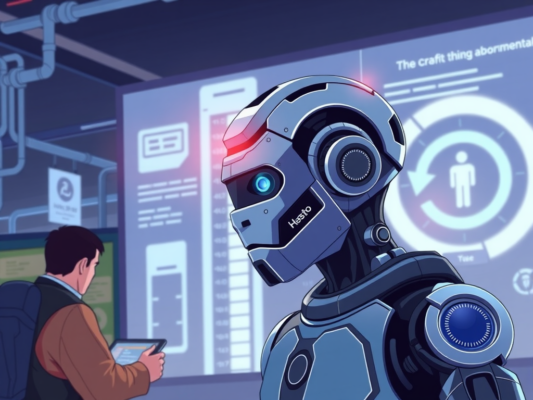
The Hidden Dangers of Relying on AI Predictions
As humans, we tend to place a great deal of trust in artificial intelligence systems when it comes to making predictions. However, it is crucial to remember that these systems are not infallible, and there are hidden dangers in relying too heavily on AI forecasts. One of the main risks is the tendency for overconfidence in the accuracy of these predictions, which can lead to costly mistakes and missed opportunities. AI systems are only as good as the data they are trained on, and they can be easily influenced by biases or errors in the data. This can result in misleading or inaccurate predictions that can have serious consequences for businesses and individuals alike. It is important to approach AI predictions with a healthy dose of skepticism and to always validate the results with human judgment and expertise. By being aware of the hidden dangers of relying on AI predictions, we can ensure that we make more informed and reliable decisions in the future.
A Cautionary Tale: The Pitfalls of Overconfident AI Forecasts
A cautionary tale: The pitfalls of overconfident AI forecasts. In the fast-paced world of artificial intelligence and machine learning, it's easy to get swept up in the excitement of what these technologies can achieve. However, it's crucial to remember that AI is not infallible, and overconfidence in its predictions can lead to disastrous outcomes.

A common pitfall of overconfident AI forecasts is the tendency to rely too heavily on the technology without considering its limitations. While AI can process vast amounts of data and identify patterns that humans may overlook, it is not foolproof. It's essential to approach AI forecasts with a healthy dose of skepticism and not blindly trust its predictions without question.
Another risk of overconfidence in AI forecasts is the potential for biases to be amplified. If the data used to train the AI model is biased or incomplete, the forecasts it generates may reflect these biases. This can lead to decisions being made based on faulty information, resulting in unintended consequences.
Ultimately, the key to avoiding the pitfalls of overconfident AI forecasts is to approach them with caution and critical thinking. While AI can be a powerful tool, it is not a substitute for human judgment and oversight. By being aware of the limitations of AI and actively questioning its predictions, we can harness its potential while minimizing the risks associated with overconfidence.
Understanding the Risks of Blindly Trusting AI Predictions
Understanding the risks of blindly trusting AI predictions is crucial in today's rapidly evolving technological landscape. While AI has shown great promise in forecasting trends and making predictions, there are inherent risks that come with placing too much confidence in these forecasts. One of the main risks is the potential for bias in the data used to train AI algorithms. This bias can lead to inaccurate predictions and decisions that can have real-world consequences. Additionally, AI systems are not infallible and can make mistakes, especially when faced with complex or unfamiliar situations. It is important to approach AI predictions with a critical eye and to consider the limitations and uncertainties associated with these forecasts. By understanding the risks involved, we can better utilize AI technology while mitigating potential negative outcomes.
Frequently Asked Question
What is the risk of overconfidence in AI forecasts?
One of the major risks of overconfidence in AI forecasts is the tendency for individuals or organizations to place too much trust in the accuracy and reliability of AI predictions. When overconfidence is present, there is a higher likelihood of making decisions based on flawed or misleading information provided by AI systems. This can lead to significant financial losses, missed opportunities, or even reputational damage. It is important to critically evaluate and validate AI forecasts to mitigate the risks associated with overconfidence.
How can overconfidence in AI forecasts impact decision-making?
Overconfidence in AI forecasts can impact decision-making by influencing individuals to ignore contradictory evidence or alternative perspectives. This can lead to a false sense of security and a lack of critical thinking when interpreting AI predictions. Decision-makers may become overly reliant on AI forecasts, leading to a disregard for human intuition and expertise. This can result in poor decision-making, increased risk exposure, and a failure to adapt to changing circumstances. It is crucial to balance the use of AI forecasts with human judgment to avoid the negative consequences of overconfidence.
What strategies can be implemented to mitigate the risk of overconfidence in AI forecasts?
To mitigate the risk of overconfidence in AI forecasts, organizations should implement robust validation processes to assess the accuracy and reliability of AI predictions. This can involve cross-validating AI forecasts with historical data, conducting sensitivity analyses, and seeking input from domain experts. It is also important to establish clear criteria for decision-making based on AI forecasts and to encourage a culture of healthy skepticism. By promoting transparency, accountability, and critical thinking, organizations can reduce the likelihood of overconfidence in AI forecasts and make more informed decisions.