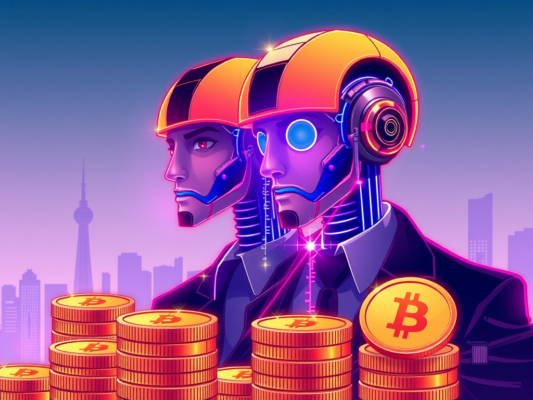
Exploring the Differences Between AI Market Makers and Traditional Liquidity Providers
In the world of financial markets, there are two main players: AI Market Makers and Traditional Liquidity Providers. These two entities play a crucial role in ensuring that the market functions smoothly and efficiently.
AI Market Makers are algorithms that use artificial intelligence to make decisions about buying and selling securities. They are able to analyze large amounts of data in real-time and make split-second decisions based on market conditions. Traditional Liquidity Providers, on the other hand, are human traders who use their experience and intuition to provide liquidity to the market.
One of the key differences between AI Market Makers and Traditional Liquidity Providers is their speed and efficiency. AI Market Makers are able to react to market changes much faster than humans, allowing them to take advantage of opportunities that may arise. Traditional Liquidity Providers, on the other hand, may take longer to make decisions, which can result in missed opportunities.

Another difference between the two is their ability to adapt to changing market conditions. AI Market Makers are constantly learning and evolving, which allows them to adjust their strategies in real-time. Traditional Liquidity Providers may have a harder time keeping up with rapidly changing market conditions.
Overall, both AI Market Makers and Traditional Liquidity Providers play important roles in the financial markets. While AI Market Makers may have certain advantages in terms of speed and efficiency, Traditional Liquidity Providers bring a human element to the market that cannot be replicated by algorithms. It's essential to understand the differences between these two entities to make informed decisions in the world of finance.
AI Market Makers: Revolutionizing Liquidity Provision in Financial Markets
AI market makers are changing the game when it comes to providing liquidity in financial markets. These cutting-edge algorithms use artificial intelligence to make quick, data-driven decisions that traditional liquidity providers simply can't match. By analyzing massive amounts of market data in real-time, AI market makers are able to respond to changing market conditions faster and more effectively than their human counterparts. This revolution in liquidity provision is helping to improve market efficiency and stability, benefiting both traders and investors alike.
In addition to their speed and accuracy, AI market makers also offer a level of scalability that traditional liquidity providers struggle to achieve. These algorithms can handle a much larger volume of trades simultaneously, making them ideal for today's fast-paced and high-volume markets. This scalability not only benefits market participants by providing ample liquidity, but also helps to reduce the risk of market disruptions and price volatility.
Furthermore, AI market makers are constantly evolving and improving, thanks to their ability to learn and adapt over time. This means that these algorithms are always getting better at providing liquidity, making them an invaluable resource for today's financial markets. With their unparalleled speed, scalability, and adaptability, AI market makers are truly revolutionizing the way liquidity is provided in financial markets.
Traditional vs AI: A Comparison of Liquidity Provider Strategies
When it comes to liquidity providers, there are two main types: traditional market makers and AI market makers. Traditional liquidity providers rely on human traders to make decisions based on market trends and analysis. On the other hand, AI market makers use advanced algorithms and machine learning to execute trades automatically and efficiently.
Traditional market makers have been around for decades and have a deep understanding of market dynamics. They use their expertise and experience to provide liquidity to the market, ensuring that there are buyers and sellers for every trade. However, their strategies can be limited by human error and emotions, leading to potential inefficiencies and delays in trading.
In contrast, AI market makers are able to process vast amounts of data at lightning speed, allowing them to make split-second decisions based on real-time market conditions. This can result in faster and more accurate trades, with minimal human intervention. AI market makers are also able to adapt and learn from past trades, constantly improving their strategies to maximize profits and minimize risks.
Overall, the key difference between traditional and AI liquidity providers lies in their approach to trading. Traditional market makers rely on human judgment and experience, while AI market makers leverage cutting-edge technology and data analysis to make informed decisions. Both types of providers have their own strengths and weaknesses, and the choice between them ultimately depends on the individual needs and preferences of traders.
Frequently Asked Question
AI Market Makers vs Traditional Liquidity Providers
When it comes to providing liquidity in the financial markets, there are two main players: AI market makers and traditional liquidity providers. AI market makers use advanced algorithms and data analysis to make quick and efficient trades, while traditional liquidity providers rely on human traders to execute trades. Both types of providers play a crucial role in ensuring that there is enough liquidity in the market for investors to buy and sell assets easily.
Role of AI Market Makers
AI market makers use machine learning and artificial intelligence to analyze market data and make trading decisions in real-time. This allows them to react quickly to changes in market conditions and provide liquidity when it is needed most. By using algorithms to automate trading processes, AI market makers can offer more competitive prices and tighter spreads than traditional liquidity providers.
Benefits of Traditional Liquidity Providers
While AI market makers have many advantages, traditional liquidity providers still play a valuable role in the market. Human traders can use their experience and intuition to navigate complex market conditions and provide liquidity in times of market stress. Additionally, traditional liquidity providers can offer personalized service and build relationships with clients that AI market makers may not be able to replicate.
Choosing the Right Provider
When deciding between AI market makers and traditional liquidity providers, it's important to consider your specific needs as an investor. If you value speed and efficiency, an AI market maker may be the best choice. However, if you prefer a more personalized approach and value human interaction, a traditional liquidity provider may be a better fit. Ultimately, the decision will depend on your trading style and the level of support you require.