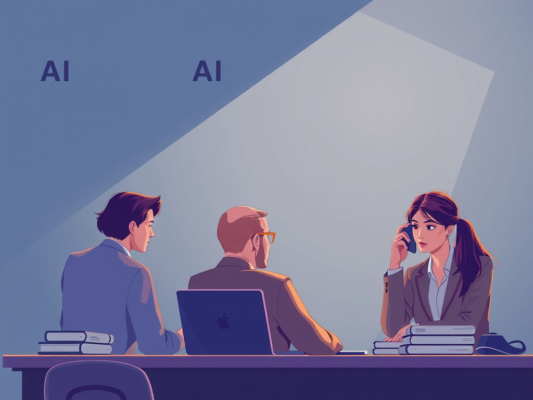
Unveiling the Essential AI Fundamentals for Everyone
Artificial Intelligence (AI) is revolutionizing the way we live and work, and it's essential to have a basic understanding of its fundamentals. One key aspect of AI is machine learning, where algorithms are used to analyze data and make predictions or decisions without being explicitly programmed to do so. This allows AI systems to learn from experience and improve over time. Another important concept is neural networks, which are inspired by the structure of the human brain and are used to process complex information. AI also includes natural language processing, enabling machines to understand and generate human language. Additionally, AI involves computer vision, enabling machines to interpret and understand visual information. This combination of technologies is what powers many of the AI applications we use today.
Discover the Must-Know Basics of Artificial Intelligence
Artificial intelligence, or AI, is a rapidly evolving technology that is becoming increasingly prevalent in our daily lives. It is important for everyone to have a basic understanding of AI in order to fully grasp its implications and potential. One key aspect of AI is its ability to learn and adapt, mimicking human intelligence to perform tasks that typically require human input. This includes problem-solving, decision-making, and even creative thinking. AI systems can process large amounts of data at incredible speeds, making them invaluable tools for businesses and industries across the globe.
Another important concept to understand about AI is machine learning. This is a subset of AI that involves algorithms and statistical models that enable machines to improve their performance on a specific task without being explicitly programmed. Machine learning allows AI systems to analyze data, identify patterns, and make predictions based on that data. This is why AI is often used in tasks such as data analysis, image recognition, and natural language processing.

In addition to machine learning, AI also encompasses other technologies such as neural networks, deep learning, and robotics. Neural networks are systems inspired by the human brain that can learn from large amounts of data. Deep learning is a subset of machine learning that uses neural networks with multiple layers to process complex data. Robotics involves the development of physical machines that can perform tasks autonomously, often with the help of AI technology.
Overall, understanding the basics of artificial intelligence is essential in today's increasingly digital world. From machine learning to neural networks, AI technologies are shaping the future of industries and revolutionizing the way we live and work. By familiarizing yourself with these key concepts, you can better appreciate the potential and impact of AI in our society. So, stay informed and be prepared for the AI revolution that is already underway.
Exploring Key AI Concepts Every Individual Should Understand
Exploring Key AI Concepts Every Individual Should Understand
Artificial Intelligence, or AI, is a rapidly evolving technology that is shaping the way we live and work. One key concept to understand is machine learning, which allows machines to learn from data and make decisions without being explicitly programmed. Another important concept is neural networks, which are modeled after the human brain and are used to recognize patterns and solve complex problems. Additionally, natural language processing enables machines to understand and generate human language, making it possible for us to interact with AI systems more intuitively. Overall, having a basic understanding of these key AI concepts can help us navigate the increasingly AI-driven world we live in.
Frequently Asked Question
What is Artificial Intelligence (AI)?
Artificial Intelligence (AI) is the simulation of human intelligence processes by machines, such as learning, reasoning, and self-correction. AI systems can perform tasks that typically require human intelligence, such as visual perception, speech recognition, decision-making, and language translation. AI technology is used in various industries, including healthcare, finance, transportation, and entertainment.
How Does Machine Learning Fit into AI?
Machine Learning is a subset of AI that allows machines to learn from data without being explicitly programmed. It uses algorithms to parse data, learn from it, and make decisions or predictions based on the information. Machine Learning is essential for many AI applications, such as image recognition, natural language processing, and autonomous vehicles. Machine Learning models improve over time as they are exposed to more data.
What are the Different Types of AI?
There are two main types of AI: Narrow AI and General AI. Narrow AI, also known as Weak AI, is designed to perform specific tasks or solve particular problems. It excels at a single task, such as playing chess or recommending movies. General AI, on the other hand, is a form of AI with the ability to understand, learn, and apply knowledge in a variety of domains. Artificial General Intelligence (AGI) aims to mimic human intelligence and consciousness.
What are the Ethical Concerns Surrounding AI?
AI raises various ethical concerns, such as bias in AI algorithms, job displacement due to automation, data privacy and security, and the potential misuse of AI technology. Companies and policymakers must address these ethical considerations to ensure that AI is developed and used responsibly. AI ethics frameworks and guidelines are being developed to promote the responsible use of AI.
How Can I Learn More About AI?
There are many resources available for those interested in learning more about AI. Online courses, books, tutorials, and workshops are great ways to acquire knowledge about AI fundamentals, algorithms, and applications. Keeping up with the latest research and trends in AI is essential for anyone looking to deepen their understanding of this rapidly evolving field. AI education is key to staying competitive in the job market and contributing to the advancement of AI technology.