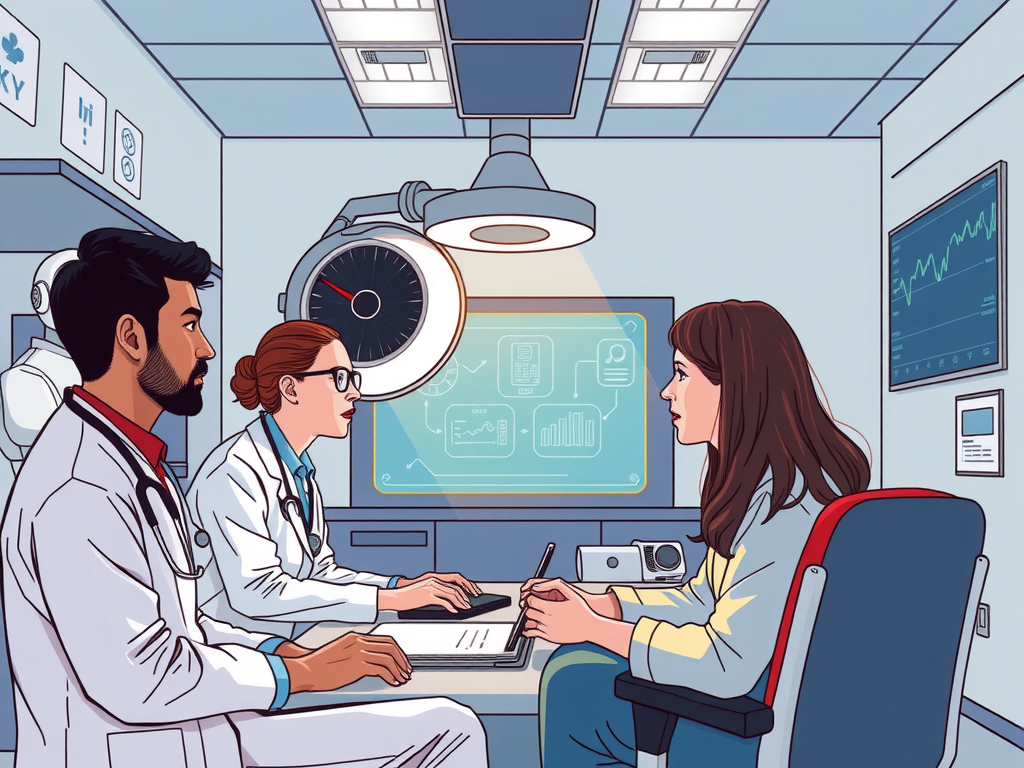
AI technology has revolutionized the healthcare industry, offering new possibilities for training and education. Creating accessible training videos using AI can help healthcare professionals easily learn new procedures and techniques. In this article, we will explore the benefits of using AI in healthcare training and how it can improve accessibility for medical staff.
By utilizing AI-powered training videos, healthcare organizations can provide comprehensive and interactive learning experiences for their staff. These videos can be easily accessed anytime, anywhere, making training more convenient and efficient. Learn more about the impact of AI in healthcare education and how it is reshaping the way medical professionals acquire new skills and knowledge.
Table of contents
Revolutionizing Healthcare Education with AI-Powered Training Videos
Revolutionizing Healthcare Education with AI-Powered Training Videos

In today's fast-paced world, the use of artificial intelligence (AI) in healthcare is becoming increasingly prevalent. One area where AI is making a significant impact is in the creation of accessible training videos for healthcare professionals. These AI-powered videos are revolutionizing the way healthcare education is delivered, providing a more efficient and effective learning experience for medical students and professionals alike.
By harnessing the power of AI, healthcare organizations can create training videos that are tailored to the needs of individual learners. This personalized approach helps to ensure that each student receives the information they need in a format that is easy to understand and digest. AI algorithms can analyze the learning patterns of each student and adapt the content of the videos accordingly, helping to improve retention and understanding.
AI-powered training videos also offer a more interactive learning experience for healthcare professionals. By incorporating features such as quizzes, simulations, and virtual reality, these videos engage learners in a way that traditional training methods cannot. This hands-on approach helps to reinforce key concepts and skills, leading to better outcomes for both patients and healthcare providers.
Overall, the use of AI-powered training videos in healthcare education is transforming the way that medical professionals learn and grow. By providing accessible, personalized, and interactive learning experiences, these videos are helping to shape the future of healthcare education and ensure that professionals are equipped with the knowledge and skills they need to provide the best possible care for their patients.
Enhancing Accessibility in Healthcare Training through AI Video Technology
When it comes to healthcare training, accessibility is key in ensuring that all healthcare professionals have the knowledge and skills they need to provide quality care. With the help of AI video technology, healthcare training materials can be made more accessible than ever before. By using AI to create training videos, healthcare organizations can cater to a wider range of learning styles and abilities, making it easier for everyone to access and understand the content.
AI video technology can enhance accessibility in healthcare training in several ways:
- Automated closed captioning and transcription services can make videos accessible to individuals with hearing impairments.
- Interactive features such as quizzes and simulations can help engage learners and improve retention of information.
- Personalized learning paths can be created based on individual learning needs and preferences, ensuring that each learner gets the most out of their training experience.
Improving Patient Care with AI-Driven Training Videos in Healthcare Industry
Imagine a world where healthcare professionals have access to cutting-edge AI-driven training videos that enhance their skills and knowledge, ultimately leading to improved patient care. The healthcare industry is constantly evolving, and the use of artificial intelligence in training videos has the potential to revolutionize how medical professionals learn and grow in their field.
By utilizing AI technology, training videos can be personalized to meet the unique needs of each healthcare professional. This tailored approach allows for more effective learning experiences, leading to better retention of information and improved performance in real-life patient care scenarios. The accessibility of these videos also means that healthcare professionals can access training anytime, anywhere, making continuous learning more convenient and efficient.
AI-driven training videos can also play a crucial role in standardizing medical practices across different healthcare settings. By providing consistent and up-to-date training materials, healthcare organizations can ensure that all staff members are following best practices and protocols, ultimately leading to better patient outcomes. Additionally, these videos can help address skill gaps and ensure that all healthcare professionals are equipped with the knowledge they need to provide high-quality care.
Frequently Asked Question
How can AI be used to create accessible training videos in healthcare?
In healthcare, AI technology can be utilized to create accessible training videos by automatically generating captions and subtitles, optimizing video content for screen readers, and enhancing visual aids for individuals with different learning styles. By leveraging AI algorithms, healthcare organizations can ensure that their training videos are inclusive and accommodating to a diverse audience, ultimately improving knowledge retention and comprehension among healthcare professionals.
What are the benefits of using AI for creating training videos in healthcare?
By using AI for creating training videos in healthcare, organizations can streamline the production process, reduce costs associated with manual video editing, and improve the overall accessibility and effectiveness of their training materials. Additionally, AI-powered video creation tools can help healthcare institutions reach a wider audience and provide personalized learning experiences, ultimately leading to better patient outcomes and enhanced professional development for healthcare staff.
How can healthcare professionals integrate AI-powered training videos into their learning curriculum?
Healthcare professionals can integrate AI-powered training videos into their learning curriculum by incorporating them into existing online learning platforms, virtual training sessions, and professional development programs. By leveraging AI technology, healthcare organizations can provide on-demand access to training videos, track individual learning progress, and customize learning experiences based on each professional's unique needs and preferences. This not only enhances the efficiency of training programs but also ensures continuous learning and skill development among healthcare professionals.
What are some challenges associated with using AI for creating accessible training videos in healthcare?
Some challenges associated with using AI for creating accessible training videos in healthcare include ensuring the accuracy and reliability of AI-generated content, addressing potential biases in AI algorithms, and maintaining data privacy and security protocols. Healthcare organizations must also consider the ethical implications of AI technology in training and education, such as the potential impact on job roles and responsibilities, patient care outcomes, and professional standards. By addressing these challenges proactively and implementing robust governance frameworks, healthcare professionals can maximize the benefits of AI-powered training videos while mitigating potential risks and limitations.
Conclusion
In conclusion, using AI technology in healthcare to create accessible training videos is a valuable tool that can improve the quality of training for healthcare professionals. These videos can help to bridge the gap between theoretical knowledge and practical application, making it easier for medical staff to learn new skills and techniques. By utilizing AI in this way, healthcare organizations can ensure that their staff are well-trained and up-to-date on the latest medical procedures and technologies. This innovative approach to training can ultimately lead to better patient outcomes and a more efficient healthcare system overall.